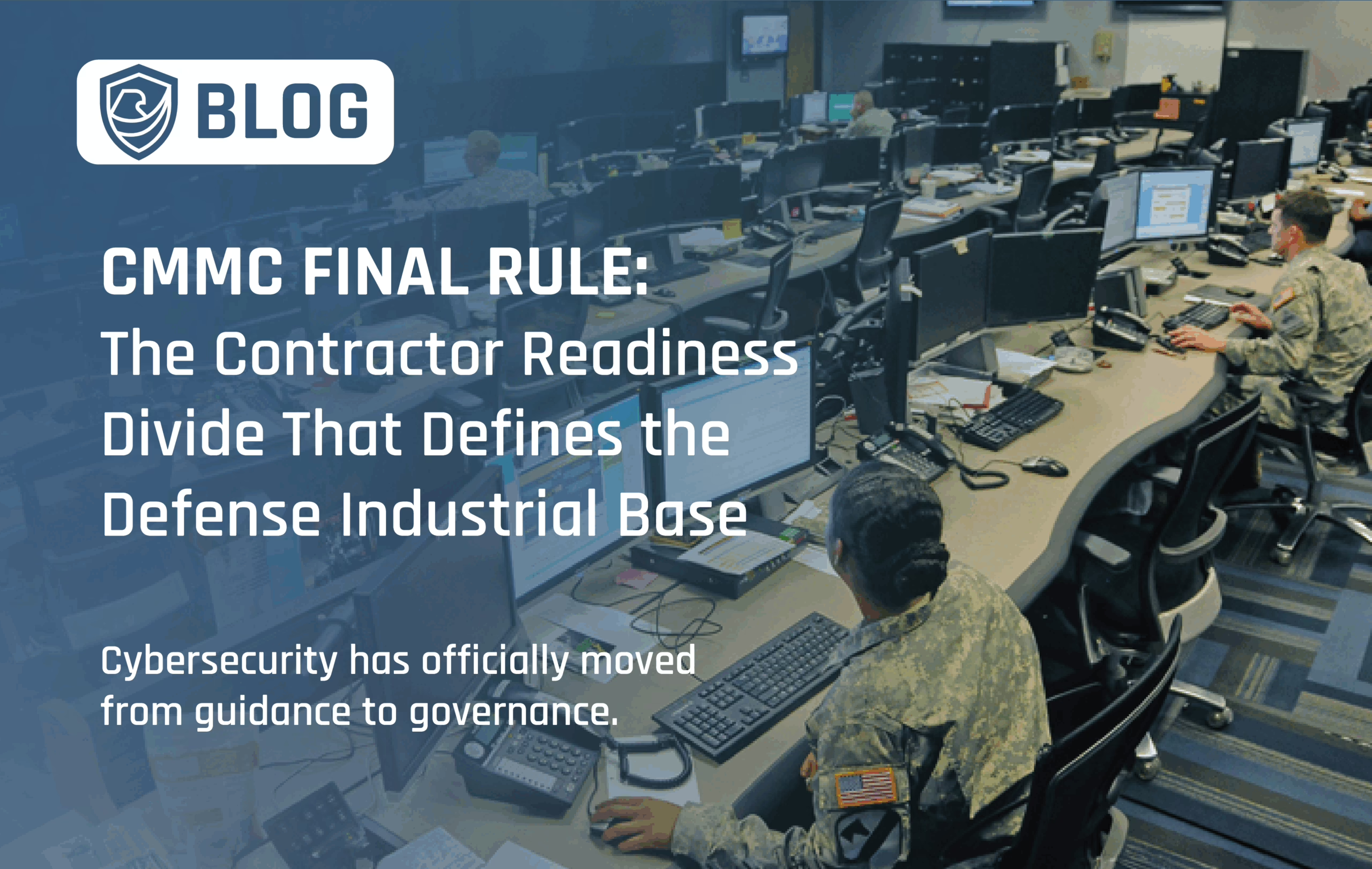
CMMC Final Rule: The Contractor Readiness Divide That Defines the Defense Industrial Base
The Sept. 10 Final Rule transforms cybersecurity from guidance to performance law. With DFARS 252.204-7021 and Level 2 enforcement set for Nov 10, 2025, defense contractors must operationalize security—now—to stay eligible and mission-ready.
Sentinel Blue isn’t here to cheerlead, but we’re here to call the play.
We’ve broken down the timelines, technical pivots, and operational realities shaping the next phase of CMMC enforcement.
The Play
The Cybersecurity Maturity Model Certification (CMMC) Final Rule, published September 10, 2025, turned cybersecurity from compliance paperwork into contractual performance risk.
The new DFARS 252.204-7021 and 7025 clauses require validated CMMC status in SPRS before award, annual affirmations of continuous compliance, and mandatory flow-downs for subcontractors.
CMMC is set for enforcement November 10, 2025: Level 1 and Level 2 requirements can begin appearing in new DoD solicitations (federalregister.gov). Keep in mind, this is still a phased roll-out with November 10th being the beginning date that the rule is applied to contracts.
Why This Moment Matters
The headlines speak for themselves:
- $4.6 million DOJ FCA settlement involving alleged misrepresentation of cybersecurity compliance signaled early enforcement activity and a clear reminder that accuracy matters as requirements tighten.
- CISA shutdown furloughed thousands, exposing national readiness gaps.
- FEMA and CBP breach (“Fedgate”) leaked weeks of data and triggered leadership firings.
- “Signalgate” underscored that human and policy failure, not technology alone, remains the most exploited weakness.
Cybersecurity has moved beyond guidance and is now ingrained governance with contractual weight behind every control.
From Policy to Penalty: When Cybersecurity Becomes Contract
- Accountability is on-contract: CMMC requirements are now DFARS obligations.
- Risk is corporate: False attestation can trigger withholdings, termination, or FCA litigation.
- Time compresses: Phase 1 launches November 10, 2025, with Level 2 self-assessments and select third-party reviews coming into scope.
- POA&M timelines will be structured and time-bound: this brings greater predictability to the remediation process which provides 180 days following the C3PAO assessment.
- Annual affirmation is mandatory: C-suite accountability is no longer symbolic.
If your cyber program depends on “we’ll fix it later,” you’re betting your business on a timeline that no longer exists.
The Readiness Divide (And Why It’s Widening)
- Builders: They aligned NIST 800-171 controls with operations, built evidence pipelines, and are already certified or assessment-ready.
- Box-checkers: They wrote policies and bought tools but never operationalized them and must now turn intent into proof.
- Hopefuls: They waited for clarity that’s already here, and they’ll discover that “later” is a luxury contracts don’t offer.
The readiness divide defines who advances and who’s left waiting. Defined survivability now belongs to the prepared, and contractors who can prove readiness in real time will lead the next mission-ready tier of the DIB.
Compliance Isn’t Maturity (And Assessors Know It)
Assessors and C3PAOs look for proof in motion which include habits that demonstrate operational discipline, sustained control, and a culture where cybersecurity is a realized part of the business.
- Identity over perimeter: MFA is everywhere; privileged access is monitored and tested.
- Evidence over assertions: Actionable records like tickets, logs, and approvals do demonstrate that cybersecurity is performed, measured, and proven daily.
- Containment over convenience: Enclaves can be effective for specific use cases when isolating CUI or limiting compliance scope, but they’re not one-size-fits-all. The right strategy depends on architecture, contract data, business and operations, and the mission.
- Continuity over complacency: A sustained rhythm of patching, recovery validation, and vendor accountability keeps readiness real and performance defensible.
You can rent a toolset. You can’t rent a culture. True resilience is built through disciplined configuration, continuous monitoring, and response routines where every control is treated as mission infrastructure. These are clear habits no vendor can sell you.
The Contract Clause Nobody Likes to Discuss
Misrepresentation Risk. If your SPRS score, System Security Plan (SSP), or affirmation paints a rosier picture than reality, you’ve volunteered for liability. The MORSECORP case proves it.
Honesty and evidence are now the currency of credibility for contract continuity.
What To Do Now (30-60-90 Day Field Plan)
Days 0-30: Stabilize & Prove
- Re-baseline your SPRS score with current evidence as this will inform everything moving forward.
- Enforce MFA, inventory admin accounts and disable unnecessary ones.
- Map your CUI boundary, systems, data flows, and personnel.
- Enable identity and endpoint telemetry designed for immediate action. This includes data you can query, correlate, and pivot on to trace privilege abuse and real-time lateral movement.
Days 31-60: Contain & Operationalize
- Strengthen your containment strategy, whether by operating within GCC High for higher-risk or ITAR workflows, or implementing a dedicated CUI enclave when isolation is required. Enclaves remain powerful tools for specific scenarios, but they’re not the default solution for every contractor.
- Regardless of platform, GCC High, or hybrid, effectiveness comes down to governance and configuration. The difference isn’t just where your data lives, but how consistent access, monitoring, and control practices are enforced across the environment.
- Build an evidence library (change tickets, approvals, restore tests).
- Tabletop core risks like identity breach, supply-chain incident, and CUI exfiltration.
Days 61-90: Sustain & Demonstrate
- Close priority POA&Ms (privileged access, vulnerability remediation).
- Implement vendor oversight with removal criteria for non-compliance.
- Conduct a mock assessment with a C3PAO or qualified consulting partner.
One Microsoft & Cloud Angle You Can’t Ignore
We consider licensing debates to be decoys. The real, and significantly more important question is whether your CUI is stored and processed in an environment that meets contractual expectations.
Cloud strategy is contract strategy. Selecting platforms built for compliance and resilience ensures your data resides where both the mission, and the clause, expect it to be.
Signs You’re Ready (And Signs You’re Not)
Green Lights
✅ You can instantly show who accessed what, when, and why.
✅ Your enclave or environment diagram matches live systems.
✅ Your POA&Ms shrink because controls became habits.
Red Flags
⚠️ Your best evidence is a policy PDF.
⚠️ You can’t restore a backup in under an hour.
⚠️ Your admin list surprises your admins.
Keep Up With News: Why These Updates Matter
- CMMC Level 2 is already live. Third-party certifications are being awarded ahead of formal phases.
- DoD Phase 1 starts Nov 10, 2025. Level 1 self-assessment and Level 2 readiness determine contract eligibility.
- Federal breaches reinforce urgency. From the FEMA/CBP incident to federal court system attacks, data exposure outpaces policy.
- CISA’s shutdown reveals systemic fragility as CMMC seeks to harden the supply chain.
Readiness has evolved from message to mandate and is now the threshold between being considered and being trusted.
Sentinel Blue Stance: Relentless Integrity. Watchful Stewardship.
We don’t sell fear, and we want our partners to succeed. We stand the post with you, and sometimes that means saying what others won’t. The DIB deserves partners who measure success in defended networks, trusted contracts, and confidence that is earned through proven resilience.
For contractors moving from compliance to capability, now is the time to operationalize your readiness. When cyber becomes contract, the only safe place is ready.